
ANTLER SHED

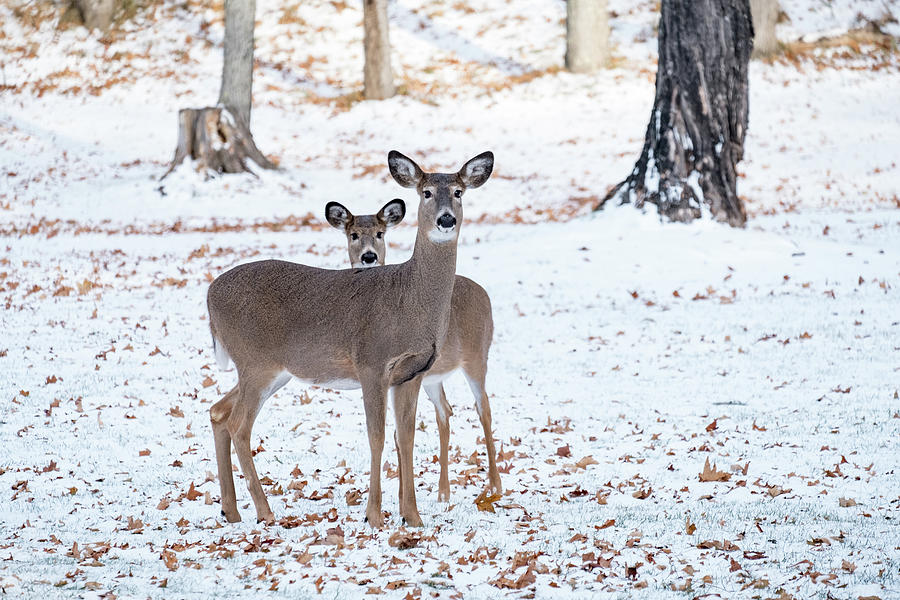
For years Monica and I have seen many deer that live in the woods behind our house, and over those years I would say there are at least four bucks we see frequently. Each passing season we have witnessed those bucks’ antlers grow from buttons to spikes into full racks and shed them each year. Three weeks ago, we viewed one ten-point buck that shed his rack, then two eight pointers last week.
As there’s no exact timing for bucks to lose their antlers, the peak shedding period beings in January and February but there are many factors that can influence this yearly occurrence. The main reason is the reduction in testosterone but health, stress and even weather can contribute to this yearly cycle.
After rut (usually first two weeks in November) a bucks testosterone levels lower and this begins OSTEOCLASTS (bone cells) at the base of their antlers start to resorb bony tissue that connect the antlers to the skull. At this time the weight the antlers cannot be supported and fall off.
As I mentioned above, a buck’s health can play into shedding also. An unhealthy buck or stress from a lack of food during a severe winter will cause some bucks to lose its rack before others. Then younger white tails will retain their antlers longer than mature bucks, so age also can determine when antler shed occurs.
It’s been written that genetics plays a part when a buck will drop their headgear, but there is on ongoing studies on that subject. The one thing that some research on genetics has shown is that a heathy buck will shed their antlers within the same few days each year. Once the antlers are removed you may see what looks like an open wound where they were attracted but this area heals very fast. Within a few days the new growth starts, and the open area is covered in what is known as velvet. This new velvet covering supplies nutrient, oxygen and mineral that produces bone growth.
If you see a male white tail deer and wonder how old that animal is, here’s the basic growth rate of a white tail buck for age and size.
Keep in mind antler size is influenced by genetics, nutrition and habitat.
Less than 1 year = (BUTTON BUCK) 2-inch nubs.
1 year = up to 6-inch tines (spikes) narrower than their ears.
2 years = 4 to -8-inch brow tines wider than their ears.
3 years = 6 to-10-inch tines that are more defined and up to 75% of growth.
4 years = 8 to 12 inches with a wider spread. 90% of potential growth.
5 years = usually at peak growth and could reach over 20 inches.